The Phantom Exit: When Crypto Liquidity Vanishes Right When You Need It Most
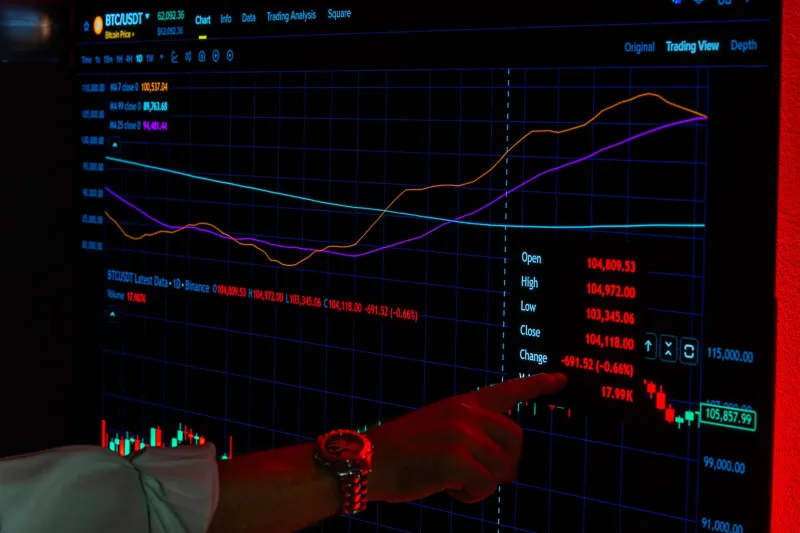
There's a particular kind of frustration that hits different in crypto. Not the frustration of picking the wrong token, or getting shaken out of a position too early. This one is sneakier. It's the moment you finally decide to pull the trigger on a profitable trade — and the market you thought was right there waiting for you just... isn't.
Welcome to the liquidity mirage. It's one of the most expensive lessons in decentralized finance, and it's one that even experienced Tanuki holders have bumped into the hard way.
Volume Is Not Liquidity — Full Stop
This is the misconception that starts everything. When you pull up a chart and see millions of dollars in 24-hour trading volume, your brain registers safety. There's activity here. People are trading. I can get in and out.
But volume is a historical snapshot. It tells you what happened yesterday, or last hour, or last week. It says nothing about whether a buyer or seller will be on the other side of your specific trade, at your specific size, at the exact moment you need to execute.
Liquidity, in the truest sense, is depth. It's the ability to transact a meaningful amount without moving the price against yourself. And in crypto — especially in smaller-cap tokens and DeFi pools — that depth can be razor thin even when volume numbers look healthy.
Think of it this way: a busy diner at 7pm looks like it has plenty of tables. But try walking in at 7:15 on a Saturday with a party of twelve, and suddenly that "busy" looks a lot different.
The Slippage Tax Nobody Talks About
Slippage is the gap between the price you expect and the price you actually get. On centralized exchanges with deep order books — think Coinbase or Kraken for major pairs — slippage on a $5,000 trade might be negligible. A few basis points, barely worth noting.
But move that same trade into a DeFi liquidity pool for a mid-cap or niche token, and the math changes fast. Automated market makers (AMMs) like Uniswap use a constant product formula to price assets. The bigger your trade relative to the pool's total liquidity, the more the price moves against you as your transaction processes. By the time it confirms on-chain, you've already paid a hidden tax.
Here's a real-world scenario that plays out constantly: a Tanuki holder watches their position climb 40% over two weeks. They decide to take profits — not all of it, just enough to lock in some gains. They enter the trade expecting to sell at, say, $1.40. But the pool they're trading in only has $200,000 in total liquidity. Their $15,000 exit is large enough relative to that pool to push the effective execution price down to $1.31. That's a 6.4% slippage hit on a single trade. The gain they thought they were locking in? Significantly smaller than the chart suggested.
And that's on a normal day. During volatility? It gets worse.
When the Market Gets Wild, Liquidity Gets Shy
Here's the cruel irony of crypto liquidity: it tends to disappear exactly when you need it most.
During periods of extreme volatility — a sudden market-wide sell-off, a black swan event, a major protocol exploit making headlines — liquidity providers on AMMs often pull their funds to avoid impermanent loss. Order books on centralized exchanges thin out as market makers step back. The spread between buy and sell prices widens. Slippage spikes. And the retail investor who thought they had a clean exit finds themselves staring at a 10%, 15%, even 20% gap between expectation and reality.
This isn't a bug in the system. It's a feature of how market participants behave under stress. Professional traders and liquidity providers protect themselves first. Retail investors, who often lack the tools to monitor pool depth in real time, are the ones left holding the bag.
How to Read Real Liquidity Before You Need It
The good news: there are concrete metrics you can check before you enter a position — not just when you're trying to exit.
Total Value Locked (TVL) in the relevant pool. For any DeFi trade, check the TVL of the specific pool you'll be trading through, not just the token's overall market cap. A token with a $50M market cap but only $300K in its primary trading pool is a liquidity trap waiting to spring.
Price impact estimates. Most DEX interfaces — Uniswap, SushiSwap, and others — will show you an estimated price impact before you confirm a trade. If that number is above 1% for a trade size you're considering, treat it as a yellow flag. Above 3% is a red flag. Don't ignore these warnings.
Order book depth on CEXs. If you're trading on a centralized exchange, look beyond the spot price. Pull up the order book and check how much volume exists within 1-2% of the current price on both sides. Thin books mean high slippage risk during fast-moving markets.
Bid-ask spread over time. A consistently wide spread — even during calm conditions — is a signal that market makers aren't confident in this asset's liquidity. Track it over several days, not just in the moment.
Historical slippage data. Some analytics tools like DEX Screener or GeckoTerminal let you examine historical trade data for specific pools, giving you a sense of how badly large trades have moved the price in the past.
The Tanuki Angle: Adaptability Starts With Awareness
The whole TanukiCoin ethos is built around shape-shifting — adapting to what the market actually is, not what you wish it were. And nothing tests that adaptability more than liquidity conditions.
A Tanuki holder who enters a position without checking pool depth isn't being bold. They're being blind. Real adaptability means doing the unglamorous work upfront: sizing positions relative to available liquidity, setting realistic slippage tolerances, and having a clear-eyed plan for how you'll exit before you ever get in.
The tanuki of Japanese folklore is clever precisely because it reads the situation before it acts. That's the move here too. Don't fall for the volume chart. Don't assume the market will be there for you just because it was there yesterday.
Your Exit Strategy Needs a Liquidity Strategy
If there's one takeaway from all of this, it's that exit planning and liquidity planning are the same thing. You can't have a real exit strategy without knowing whether the door is actually open.
Before your next trade — especially in smaller DeFi pools or newer tokens — run through the checklist. Check TVL. Simulate the price impact. Look at the order book depth. Consider breaking a large position into smaller tranches to reduce your market impact over time.
The crypto market doesn't owe you a clean exit. But with the right preparation, you can stop mistaking a mirage for a sure thing — and keep more of what you actually earned.