Too Much, Too Little, All Wrong: The Position Sizing Trap That Blows Up Crypto Portfolios
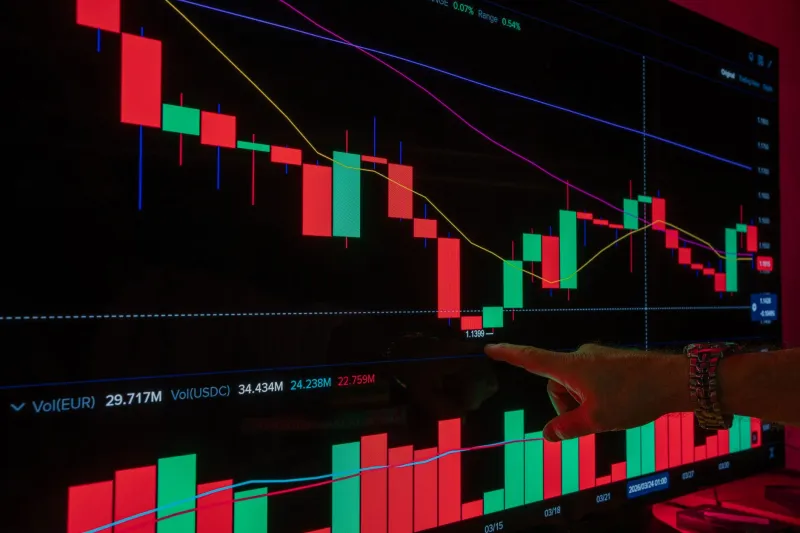
Here's a scenario that probably sounds familiar: you find a project early, you're feeling good about it, so you throw in a chunk that's maybe a little bigger than you planned. Then it 3x's, you feel like a genius, and you add more. Then it craters 80% and suddenly that "small bet" has turned into the single biggest position in your portfolio — and it's underwater.
This isn't bad luck. It's a position sizing problem. And it's probably the most common reason retail crypto investors blow up their portfolios, even when their underlying thesis was actually right.
Why Most Investors Can't Size a Position to Save Their Lives
Position sizing sounds boring. It doesn't have the dopamine hit of finding a 100x gem or the drama of a rug pull story. But it's the unglamorous backbone of every portfolio that actually survives long enough to compound.
The core issue is this: crypto moves fast, and humans are not wired to keep up. When you're managing exposure across five wallets, three chains, a handful of DEX positions, and maybe a centralized exchange account, your mental picture of "how much you actually own" is almost always wrong. You think you have a balanced spread. In reality, you've got 60% of your net worth in two correlated assets and you don't even realize it because they live in different places.
This is what researchers call the aggregation problem — and in traditional finance, it's manageable because most assets live in one or two accounts. In DeFi, your exposure is scattered across protocols, liquidity pools, staking contracts, and bridged assets. Keeping a clean real-time picture is genuinely hard.
The Psychological Layer Makes It Worse
Even if you have the tools to track everything, your brain is working against you. Two cognitive biases hit especially hard in crypto:
Recency bias makes you overweight whatever just worked. If ETH had a great month, it feels safer to put more in. If a small-cap altcoin just ran 4x, it feels like it has momentum worth chasing. The result? You keep adding to winners right before they mean-revert.
Loss aversion asymmetry means you hold losers too long and cut winners too early — the exact opposite of what position management requires. You're emotionally attached to your entry price, so you don't rebalance away from a losing position because that would "make the loss real." Meanwhile, your winning positions get trimmed because you're scared of giving back gains.
Stir those two together and you get a portfolio that's constantly misaligned with your actual risk tolerance — heavy where it should be light, light where it should be heavy.
The Feast-or-Famine Cycle Nobody Talks About
The downstream effect of bad position sizing is what we'd call the feast-or-famine cycle. During bull runs, over-concentrated positions feel like brilliance. Portfolios go parabolic. People post screenshots. Then the correction hits and those same concentrated positions become catastrophic losses — not just in dollar terms, but psychologically. Burned investors often exit the market entirely right before the next recovery, locking in losses and missing the bounce.
This cycle repeats because the lesson most people take away is "I picked the wrong token" rather than "I had too much in any single bet." So they repeat the same behavior with different assets next cycle.
How Tanuki's Framework Approaches This Differently
TanukiCoin's adaptive tokenomics model was built with this exact failure mode in mind. The Tanuki — a shape-shifting creature from Japanese folklore — is a fitting symbol here, because the whole point is that your portfolio needs to transform with market conditions, not stay rigidly fixed to a position you took six months ago.
A few things stand out about how the Tanuki model encourages better sizing behavior:
Incentivized rebalancing mechanics. Rather than leaving rebalancing entirely to individual discipline (which, let's be honest, most people don't have), Tanuki's protocol design builds in structural nudges toward diversified allocation. Holding a balanced position across Tanuki ecosystem assets isn't just philosophically smart — it's mechanically rewarded.
Transparent on-chain exposure tracking. Because Tanuki's ecosystem is designed with composability in mind, it's significantly easier to get a unified view of your actual exposure. That aggregation problem we mentioned? It's a lot smaller when your assets are playing nicely within a coherent ecosystem rather than scattered across ten unrelated protocols.
Volatility-adjusted weighting signals. One of the quieter features of Tanuki's model is that it accounts for the fact that not all positions carry equal risk per dollar. A $1,000 position in a deeply liquid, high-cap asset is not the same risk as a $1,000 position in a low-liquidity altcoin. Tanuki's framework helps surface that distinction in a way most retail dashboards don't.
What "Getting It Right" Actually Looks Like
So what does healthy position sizing look like in practice? A few principles hold up regardless of market conditions:
- No single position should represent more than 10-15% of your total crypto portfolio unless you have extremely high conviction and a clear exit strategy defined before you enter.
- Correlation matters as much as allocation. Owning five different DeFi tokens isn't diversification if they all move in lockstep with ETH. True diversification means exposure to assets with genuinely different risk profiles.
- Rebalance on a schedule, not on a feeling. Monthly or quarterly rebalancing beats reactive rebalancing almost every time. Emotion-driven rebalancing usually just means selling low and buying high with extra steps.
- Your position size should shrink as volatility rises. If you're allocating to a newer, thinner-liquidity token, size it accordingly. The potential upside doesn't change the math on the downside risk.
The Shapeshifter's Real Lesson
The tanuki in folklore isn't just a trickster — it's a survivor. It adapts. It reads the environment and responds accordingly rather than charging ahead with the same strategy regardless of what's happening around it.
That's the real metaphor here. The investors who make it through multiple crypto cycles aren't necessarily the ones with the best token picks. They're the ones who stayed disciplined about how much they put where, adjusted when conditions changed, and never let a single position become the whole story.
Position sizing won't make you rich overnight. But it'll keep you in the game long enough for your good ideas to actually pay off — and that's worth more than any moonshot.