Hold, Fold, or Go All In? A Tanuki Holder's Framework for Making the Hardest Call in Crypto

The tanuki of Japanese folklore is famous for one thing above all else: knowing when to transform. Not just how to transform — any creature can change shape under pressure — but when. That timing instinct is exactly what separates a savvy Tanuki token holder from someone who either bags a huge win or watches their unrealized gains evaporate into a bear market.
If you've been in crypto for more than one market cycle, you already know the emotional whiplash. You hold through a 40% dip because you believe in the project, and then you watch it rip 200% — only to freeze when it matters most. Do you sell? Do you add more? Do you just… keep watching the chart at 2 a.m. like some kind of degenerate oracle?
Let's cut through the noise. Here's a real framework for deciding when to hold your Tanuki position, when to trim it, and when to exit entirely — built on behavioral finance principles and actual market signals, not vibes.
The Enemy Isn't the Market. It's Your Own Brain.
Before we get into signals and thresholds, we need to talk about the psychological layer — because that's where most retail investors in the US get wrecked.
Two cognitive biases dominate bad crypto decisions:
Loss aversion makes you hold a losing position way too long because selling feels like admitting failure. You've probably heard yourself say, "I'll sell when it gets back to my entry price." That's not a strategy. That's emotional hostage-taking.
Recency bias does the opposite — it makes a recent price surge feel like proof of permanent upward momentum. After a big green week, selling feels almost offensive, like you're betraying a winning team. So you hold, and hold, and hold — right through the reversal.
Recognizing these biases doesn't make them go away. But naming them in the moment creates just enough cognitive distance to ask: Is this a reasoned decision, or am I just reacting to how the chart made me feel this morning?
Build Your Personal Conviction Score Before You Need It
The worst time to decide whether to hold or sell is when the market is moving fast. That's when emotions are loudest and clarity is lowest. Instead, build what behavioral economists call a pre-commitment device — a set of rules you establish during calm conditions that govern your behavior when things get volatile.
For Tanuki holders, a simple conviction score can work like this. Rate each of the following from 1 to 5:
- Fundamentals: Has anything changed about the protocol's development activity, tokenomics, or roadmap execution?
- Community health: Is the TanukiCoin community growing, engaged, and building — or is it mostly price talk and memes?
- Macro environment: Is broader crypto sentiment and US macro (Fed policy, risk-on/risk-off behavior) working for or against you?
- Personal financial situation: Has anything changed in your real life that affects your actual liquidity needs?
- Original thesis: Is the reason you bought still intact?
Add up your scores. If you're sitting at 18-25, that's a hold signal. If you're below 12, it's worth asking seriously whether your thesis has broken down — not just the price. Scores in between call for a partial trim, not a full exit.
This isn't a perfect system. It's a personal system. And personal systems beat impulsive decisions every single time.
Reading Market Signals Without Getting Hypnotized by Them
Okay, now the part everyone actually wants: what does the market tell you?
A few signals worth watching for any token, including Tanuki:
On-chain accumulation vs. distribution. Are wallets adding to positions at current prices, or are larger holders quietly moving tokens toward exchanges? Distribution patterns often precede price drops — not always, but often enough to take seriously. Tools like Glassnode or Nansen can surface this data without requiring a PhD in blockchain analytics.
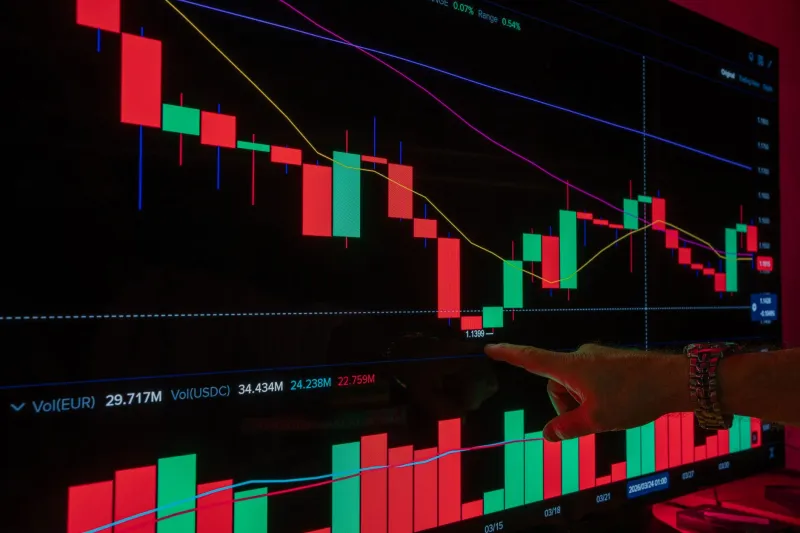
Volume divergence. When price is climbing but volume is shrinking, that's a yellow flag. Strong moves with conviction look like strong price and strong volume moving together. A price pump on thin volume is often a local top waiting to happen.
Funding rates in perpetual markets. When funding rates go strongly positive — meaning long positions are paying shorts to hold — it usually signals overleveraged optimism. That's historically a decent time to at least consider trimming spot exposure, not because the bull case is wrong, but because the short-term risk/reward has shifted.
None of these signals are magic. They're probabilistic inputs that feed your decision, not commands.
The Partial Exit: The Most Underrated Move in Crypto
Here's something the all-or-nothing crowd doesn't want to hear: you don't have to choose between holding everything and selling everything.
Partial exits — taking 20%, 30%, or 50% of a position off the table at key levels — let you lock in real gains while keeping exposure to further upside. This is especially powerful for US investors who are thinking about tax efficiency, since you can strategically time partial sales to manage capital gains across tax years.
A simple rule some experienced Tanuki holders use: sell enough to recover your original investment when a position doubles. From that point forward, you're playing with house money. The psychological freedom that comes with a zero-cost basis changes how you hold — you become far less reactive to short-term volatility because the worst-case scenario is now "I made nothing" rather than "I lost real money."
When the Exit Signal Is Actually Clear
Sometimes the decision isn't hard — it's just uncomfortable. A few situations where exiting (fully or mostly) makes straightforward sense:
- Your original thesis is gone. Not "the price is down," but the actual reason you bought — a specific product launch, a partnership, a protocol upgrade — has been delayed indefinitely, cancelled, or quietly deprioritized.
- You need the money. Crypto is a risk asset. If you have a life event coming — a home purchase, a medical expense, a business investment — liquidity beats conviction every time.
- You're checking the chart more than three times a day. This one sounds like a joke, but it's real. When a position is consuming your mental bandwidth disproportionately, that's a sign it's sized wrong for your emotional risk tolerance, regardless of the fundamentals.
Shapeshifting Is a Skill, Not a Weakness
The tanuki doesn't stay in one form because it's stubborn. It shifts because shifting is the intelligent response to a changing environment. The same logic applies to your portfolio.
Holding through volatility with conviction is a real skill. So is knowing when conviction has curdled into denial. The investors who consistently come out ahead aren't the ones who picked the perfect entry — they're the ones who built a system for making decisions, stuck to it, and updated it when the facts changed.
Your Tanuki position deserves that same discipline. Not FOMO. Not panic. Just a clear-eyed framework you actually trust.
Build it now, before the next big move. Your future self will thank you.